
Proper diamond care is defined as a consistent routine of gentle cleaning, protective wearing habits, safe storage, and scheduled professional maintenance to preserve both brilliance and long-term value. The best practices for diamond care are not complicated, but they require regularity. Oils from your skin, lotions, and everyday grime accumulate on the pavilion and prongs faster than most owners realize, and that buildup is the single biggest reason diamonds lose their sparkle. Whether you own a lab-grown solitaire from Icevaultatl, a vintage heirloom, or a moissanite halo ring, the same core diamond maintenance guidelines apply.
1. Best practices for diamond care start with the right home cleaning method
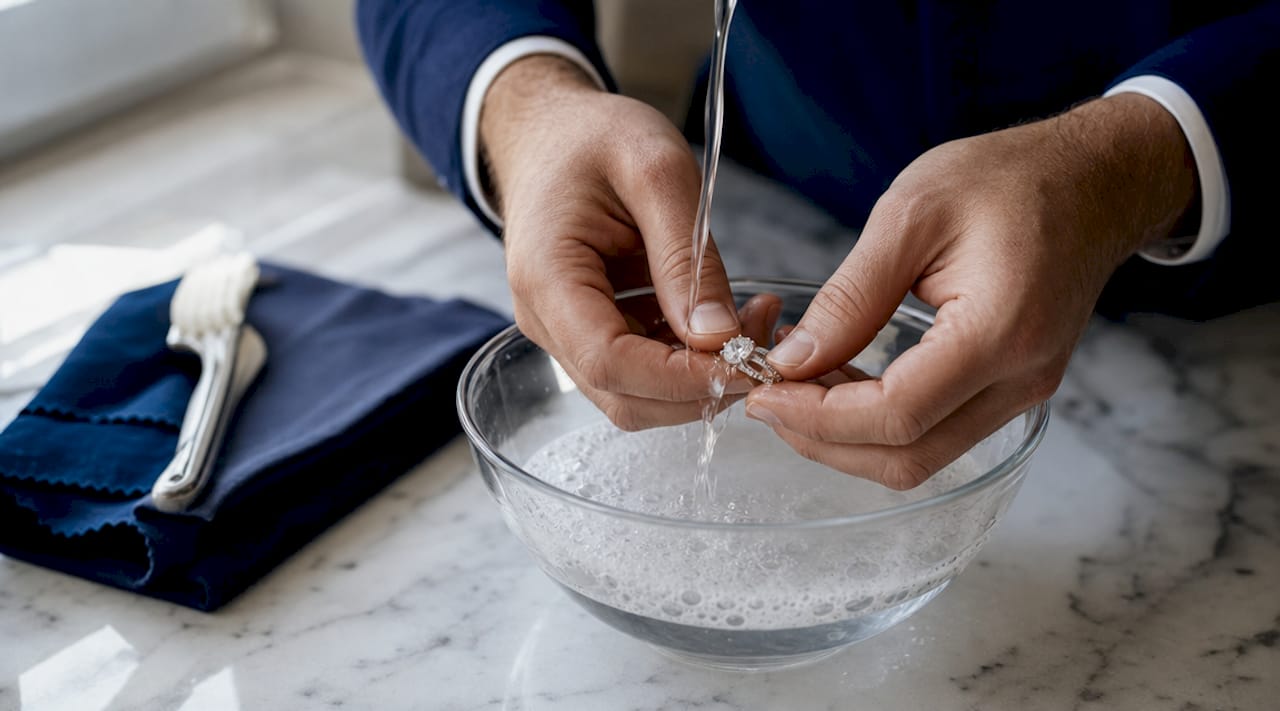
The safest and most effective home cleaning method is a 15 to 40 minute soak in warm water mixed with a few drops of mild dish soap. That soak time loosens the oils and residue that bond to metal and stone surfaces, making the next step, gentle brushing, far more effective and far less risky. Skipping the soak and going straight to scrubbing is the most common mistake owners make.
After soaking, use a soft-bristled toothbrush to work around the prongs and underneath the stone. Rinse thoroughly over a strainer or a plugged sink to prevent accidental loss, then pat the piece dry with a lint-free or microfiber cloth. Abrasive cloths, paper towels, and rough fabrics can leave micro-scratches on metal surfaces over time.
Pro Tip: Clean your diamond jewelry every two to four weeks if you wear it daily. Rings worn during cooking, gym sessions, or outdoor work may need cleaning more frequently.
For frequency, two to four weeks is the standard recommendation for daily-wear pieces. Pieces worn less often can go longer between cleanings, but a quick soak before any special occasion will restore noticeable brilliance within an hour.
2. Focus your cleaning effort on the pavilion, not just the top
Maximum sparkle comes from cleaning the pavilion, the underside of the diamond, and the tiny gaps at each prong where oils and grime accumulate most. This is the area that affects light return more than the top surface, yet most owners spend the majority of their cleaning time on the crown. Reversing that habit produces a noticeably brighter result.
Grime on the pavilion blocks light from entering and reflecting back through the stone. Even a thin film of lotion or skin oil reduces the refractive performance of a diamond significantly. Direct about 80% of your brushing effort to the underside and the prong bases, and you will see the difference immediately after rinsing.
This principle applies equally to lab-grown diamonds and natural diamonds. Both share the same optical properties, and both lose brilliance to the same type of buildup. If you want to understand more about how diamond quality factors affect light performance, that context makes the cleaning logic even clearer.
3. Wearing and handling habits that prevent damage
Removing diamond jewelry during physical activities, swimming, gardening, and household cleaning is the single most effective way to reduce both grime buildup and physical damage. This is not overcaution. Chlorine in pools weakens metal alloys over time, and impact from gym equipment or gardening tools can chip a stone or bend a prong out of alignment.
The following activities call for removing your diamonds before you start:
- Swimming in pools, hot tubs, or the ocean
- Applying lotions, sunscreen, or perfume
- Cleaning with household products containing bleach or ammonia
- Cooking, especially with oils or doughs that coat settings
- Any contact sport or weight training
- Gardening or outdoor work involving soil and tools
Storage matters as much as removal. Each piece should go into its own soft pouch or compartment. Diamonds are the hardest natural material on Earth, which means a loose diamond ring rattling against other jewelry in a drawer will scratch those other pieces. Dedicated storage prevents that damage and keeps pieces cleaner between wears.
Giving rings a break on days you are not going out also reduces cumulative grime. Skin oils transfer constantly during wear, and even a day off per week extends the time between necessary cleanings.
4. Professional inspections and cleanings: what to schedule and why
Annual or semi-annual professional inspection and cleaning is the standard recommendation for diamonds worn daily. A jeweler checks prong integrity, looks for hairline fractures in the setting, and uses equipment that reaches areas no toothbrush can. This is not a luxury service. It is the maintenance step that catches a loose stone before it falls out.
A professional cleaning session typically involves one or both of the following:
- Ultrasonic cleaning: High-frequency vibrations dislodge deep-set grime from metal and stone surfaces. This method is highly effective but carries risk for delicate or vintage settings.
- Steam cleaning: Pressurized steam removes residue and restores surface luster without abrasion. Safer for most settings than ultrasonic methods.
Ultrasonic cleaning vibrations can accelerate failure in borderline or delicate prongs, making a recent jeweler inspection critical before use. Never request ultrasonic cleaning on a piece that has not been inspected recently, particularly if it has pavé, channel-set, or vintage prong work.
Pro Tip: Ask your jeweler to check prong tips and the base of each setting during every visit. Worn prong tips are the leading cause of stone loss in everyday rings.
Beyond cleaning, appraisals are a separate and equally important professional service. Jewelry appraisals should be updated every two to three years, or after any significant change to the piece, to maintain accurate insurance documentation. Diamond values shift with market conditions, and an outdated appraisal leaves you underinsured if a piece is lost or stolen. Keep your appraisal documents alongside your purchase receipts and any grading certificates in a secure location.
5. Common mistakes that damage diamonds and settings
Most diamond damage is preventable. The following mistakes account for the majority of chipped stones, loosened prongs, and dulled surfaces that jewelers see on a regular basis.
- Using bleach, chlorine, or ammonia-based cleaners: Harsh household chemicals corrode metal alloys and can damage softer accent stones in mixed-gemstone settings. Bleach is particularly destructive to gold alloys.
- Scrubbing with stiff brushes: A nail brush or hard-bristled cleaning brush applies too much lateral force to prong tips, gradually bending them away from the stone.
- Cleaning over an open drain: One slip and a ring is gone. Always use a strainer or plug the drain before rinsing.
- Using toothpaste or baking soda: Both are mildly abrasive and will scratch metal surfaces, particularly white gold and platinum, over repeated use.
- Delaying repairs: A prong that catches on fabric is already compromised. Waiting weeks to address it increases the chance of stone loss significantly.
- Skipping inspections on vintage or estate pieces: Older settings were not built to modern tolerances. They require more frequent professional review, not less.
The pattern across all these mistakes is the same. Owners either use products that feel like they should work, or they put off maintenance because the piece looks fine from the outside. Neither approach accounts for the structural and chemical realities of fine jewelry.
Key takeaways
Consistent home cleaning combined with professional inspections every six to twelve months is the most reliable method for preserving diamond brilliance and structural integrity over time.
| Point | Details |
|---|---|
| Clean the pavilion first | Direct 80% of brushing effort to the underside of the stone where grime blocks light return. |
| Soak before scrubbing | A 15 to 40 minute warm water and dish soap soak loosens buildup before any brushing begins. |
| Remove jewelry before activity | Take off diamonds before swimming, cleaning, or applying lotions to prevent chemical and physical damage. |
| Schedule professional inspections | Annual or semi-annual jeweler visits catch loose prongs and restore brilliance beyond home cleaning capability. |
| Update appraisals every 2 to 3 years | Accurate appraisals protect insurance coverage as diamond market values shift over time. |
What consistent diamond care has taught us at Icevaultatl
The most overlooked step in any diamond care routine is the one that happens before cleaning: actually looking at the piece under good light. Most owners clean their jewelry without ever examining it closely first. A quick look at the prongs, the setting base, and the pavilion before you soak tells you where to focus and whether anything needs professional attention before you proceed.
Home cleaning is the foundation, but it has limits. A toothbrush and dish soap will not reach the interior of a bezel setting or the underside of a channel-set band. Owners who rely entirely on home methods and skip professional inspections are maintaining the surface while the structure quietly degrades. The two approaches are not interchangeable. They work together.
The appraisal piece is where most people fall short, and it is the one with the most financial consequence. Updating an appraisal feels administrative and easy to postpone. But if a ring appraised at $3,000 five years ago is now worth $5,000 and it is lost or stolen, the insurance payout reflects the old number. That gap is real money. Treating appraisals as part of the care routine, not a separate task, is the habit that protects long-term value.
For anyone considering custom ring design, the setting choice made at purchase directly affects how much maintenance the piece will require. Simpler prong settings are easier to inspect and clean. Complex pavé or micro-set designs require more frequent professional attention. That tradeoff is worth knowing before you buy.
— ICEVAULT
Diamonds worth caring for, from Icevaultatl

The best care routine starts with jewelry built to last. Icevaultatl offers lab-grown diamond studs in 5mm round brilliant D color, designed for daily wear and built to hold up to the cleaning and maintenance routines described above. For those who want more variety, the lab diamond engagement rings collection includes classic and custom styles suited to every care preference and lifestyle. Lab-grown diamonds carry the same physical and optical properties as mined stones, which means the same care practices apply and the same brilliance is achievable with consistent maintenance. Browse the full collection at Icevaultatl and find a piece worth protecting.
FAQ
How often should I clean my diamond jewelry at home?
Clean daily-wear diamond pieces every two to four weeks using warm water, mild dish soap, and a soft toothbrush. Pieces worn during physical activity or cooking may need more frequent cleaning.
Can I use toothpaste or baking soda to clean my diamond ring?
No. Both toothpaste and baking soda are mildly abrasive and will scratch metal surfaces, particularly white gold and platinum, with repeated use. Mild dish soap and warm water are the correct choice.
Is ultrasonic cleaning safe for all diamond jewelry?
Ultrasonic cleaning is not safe for all settings. Vibrations can loosen delicate prongs and damage pavé or vintage settings. Only use ultrasonic cleaning after a jeweler has inspected the piece and confirmed the setting is secure.
How often should I get my diamond jewelry professionally appraised?
Appraisals should be updated every two to three years or after any significant change to the piece. This keeps your insurance documentation accurate as market values shift.
What is the most important area to clean on a diamond?
The pavilion, the underside of the stone, is the most critical area to clean. Grime and oil accumulate there and block light return, which is the primary cause of a diamond appearing dull despite regular surface cleaning.