
Not all diamonds are colorless. That’s a fact many shoppers discover only after they’ve already started comparing prices and feel confused about why two stones that look nearly identical carry very different price tags. Diamond color is one of the four key quality factors, and it directly shapes how a stone looks, what it costs, and how well it fits your chosen setting. For anyone buying lab-grown diamonds, understanding color is especially useful because it opens up real opportunities to get better quality at a lower price point without compromising on ethics or beauty.
Table of Contents
- What does diamond color really mean?
- How is diamond color graded? Understanding the scale
- Lab-grown vs. natural: does diamond color mean the same thing?
- How diamond color impacts style, setting, and price
- Popular color choices and what’s trending in lab-grown diamonds
- Why color isn’t everything: what most guides leave out about lab-grown diamonds
- Find your perfect lab-grown diamond color with ICEVAULT
- Frequently asked questions
Key Takeaways
| Point | Details |
|---|---|
| Color defines appearance | Diamond color grades show subtle hues that influence a gem’s look and value. |
| Lab-grown offers high color | You can get premium color grades at lower prices with lab-grown diamonds. |
| Style and metal matter | Match diamond color with setting metal for the best overall jewelry design. |
| Don’t overpay for grades | Many people can’t see differences between adjacent color grades, so balance color with cut and carat. |
What does diamond color really mean?
Most people picture diamonds as perfectly clear, like a drop of water frozen in time. The reality is more nuanced. Diamond color, in the grading world, refers to how much body color a white diamond shows. A truly colorless diamond lets light pass through without any tint. As you move down the color scale, stones begin to show faint traces of yellow or brown. These tints come from nitrogen atoms present during the diamond’s formation, whether underground or inside a lab reactor.
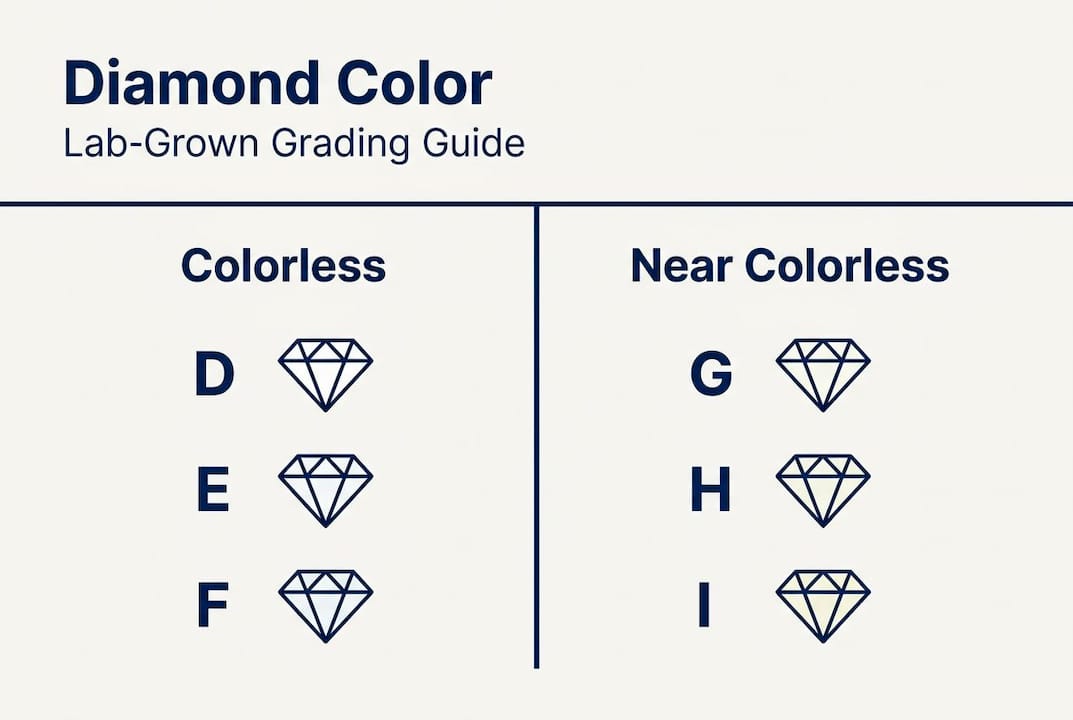
Gemological labs, including the Gemological Institute of America (GIA), grade white diamonds on a scale from D to Z. D is perfectly colorless. Z shows a noticeable light yellow or brown tone. Every letter between those two points represents a measurable difference, though the differences between adjacent grades are often invisible to the naked eye without direct comparison.
Lab-grown diamonds use this exact same grading system. A diamond color terminology guide will show you that a D color lab diamond is graded by the same criteria as a D color mined diamond. There is no separate scale or lower standard for lab-created stones.
One of the most common misconceptions is that a diamond with excellent clarity must also have excellent color. These are completely separate characteristics. A stone can be internally flawless (IF clarity) and still carry a K or L color grade. Clarity describes internal and surface features. Color describes body tint. They are independent.
Pro Tip: Color differences between adjacent grades are nearly impossible to spot without a trained eye and a controlled lighting environment. Buying one or two grades below the top of a range often saves money with no visible trade-off.
| Color grade | Category | Visible tint |
|---|---|---|
| D, E, F | Colorless | None |
| G, H, I, J | Near colorless | Minimal, hard to detect |
| K, M | Faint | Slight warmth visible |
| N to R | Very light | Noticeable tint |
| S to Z | Light | Obvious yellow or brown |
How is diamond color graded? Understanding the scale
With a solid definition in hand, you might wonder how jewelers actually assess and communicate diamond color. Here’s how grading works.
A trained gemologist places the diamond face down on a white grading tray and compares it against a set of master stones under controlled, neutral lighting. The comparison is always done face down because a diamond’s cut and brilliance can mask color when viewed from the top. The grader matches the stone to the closest master stone in the set, assigning the corresponding letter grade.
The scale breaks into five practical ranges that mean different things to buyers.
- D to F (colorless): These are the rarest and most expensive white diamonds. They look icy and bright in any setting. E color lab diamond studs are a popular choice for buyers who want the cleanest possible look in everyday earrings.
- G to J (near colorless): This is the sweet spot for most jewelry buyers. The color difference from D-F is extremely subtle and usually invisible once a stone is set. These grades offer excellent value.
- K to M (faint): A slight warmth becomes visible, especially in larger stones. Some buyers actually prefer this warmer tone, and it pairs beautifully with yellow gold settings.
| Grade range | Best setting metal | Typical use case |
|---|---|---|
| D-F | Platinum, white gold | Engagement rings, solitaires |
| G-J | White gold, rose gold | Engagement rings, earrings, pendants |
| K-M | Yellow gold, rose gold | Vintage styles, fashion jewelry |
| N-Z | Yellow gold | Budget-focused or antique looks |
Visual differences between adjacent grades are genuinely subtle. Moving from G to H, for example, is something most people cannot detect without a side-by-side comparison. This is important to know because it means you have real flexibility when choosing a stone. The grading scale applies equally to lab-grown and natural diamonds, so the knowledge you build here transfers directly to any purchase you make.
Lab-grown vs. natural: does diamond color mean the same thing?
Once you know how color is graded, it’s natural to ask whether lab and natural diamonds are judged by the same standards.
The answer is yes. The color grading system is standardized across both diamond types. A GIA or IGI certificate for a lab-grown diamond uses the same D-to-Z scale, the same master stone comparisons, and the same controlled grading environment as a certificate for a mined diamond. There is no asterisk or adjusted scale for lab-created stones.
Where things get interesting is in availability and price. Because lab-grown diamonds are created in controlled conditions, producers can more consistently achieve higher color grades. Nitrogen levels, which cause yellow tinting, can be managed more precisely in a lab environment than in the unpredictable conditions deep inside the earth. This means D, E, and F color lab diamonds are more consistently available and significantly less expensive than their mined equivalents.
“Lab-grown diamonds in top color grades are now accessible to buyers who previously could not afford the equivalent mined stone. That changes the entire conversation about what’s possible at a given budget.”
Mined D color diamonds carry a significant price premium because of their rarity. Lab-grown diamonds in the same grade can cost substantially less, with some estimates showing up to 70% less for comparable lab-grown stones compared to mined equivalents. That gap is real and it matters when you’re planning a purchase.
For buyers focused on ethics and environmental impact, this is also meaningful. Choosing a lab-grown stone at any color grade means avoiding the land disruption and supply chain concerns associated with mining. Selecting a premium D or E color lab diamond means you can have the best of both worlds: top quality and a cleaner sourcing story.
Here are the top three reasons color matters specifically for lab-grown diamond buyers:
- Budget flexibility. Higher color grades cost less in lab-grown stones, so you can prioritize color without sacrificing carat weight or cut quality.
- Consistent availability. Top color grades are easier to find in lab-grown inventory, so you’re not waiting or paying a rarity premium.
- Ethical alignment. Controlled lab conditions reduce environmental impact while still delivering the color quality you want.
How diamond color impacts style, setting, and price
You’ve learned how lab-grown diamonds can offer top color at a better value. Now let’s look at how to use this in your own jewelry choices.
Diamond color and metal color interact in ways that can either enhance or neutralize a stone’s appearance. A D or E color diamond set in platinum or white gold looks clean and bright because the cool metal tones reinforce the stone’s colorlessness. The same stone in yellow gold can look slightly warmer by contrast, which some buyers love and others want to avoid. On the other hand, a G or H color diamond in yellow gold looks perfectly white to most eyes because the warm metal absorbs and complements any slight warmth in the stone.
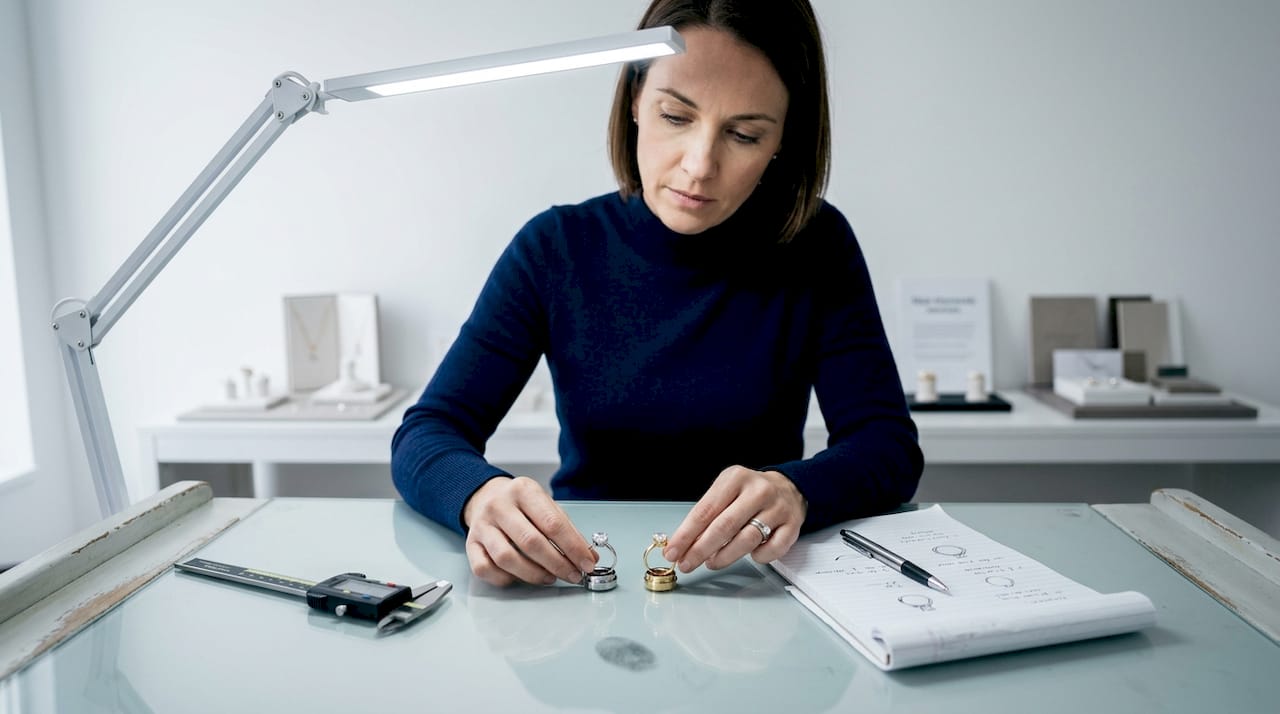
Setting style also plays a role. A bezel setting, where metal wraps around the stone’s edge, can subtly influence how color reads. A prong setting, which holds the stone with minimal metal contact, lets more light in and makes color more visible. If you’re choosing a lower color grade to save money, a bezel or halo setting can help the stone look its best.
Price differences between color grades can be significant, especially at the top of the scale. Moving from an F to a D color diamond in a 1 carat lab-grown stone can add a noticeable amount to the price, even though most people cannot tell the difference once the stone is set and worn. D color stud earrings are a popular way to experience that top-grade look without the engagement ring price tag.
Style tips for matching diamond color to metal:
- Platinum or white gold: Choose D-F for the cleanest, brightest look
- Rose gold: G-J works beautifully, with the warm metal softening any subtle tint
- Yellow gold: K-M can look completely white in this setting and saves money
- Mixed metals: Stick to G-H for versatility across different metal tones
Pro Tip: For custom jewelry, balance your color grade with cut quality first. A well-cut G color diamond will outshine a poorly cut D color stone every time. Explore lab diamond engagement ring options to see how cut and color work together in real settings.
Popular color choices and what’s trending in lab-grown diamonds
Armed with technical details and practical advice, let’s explore what real buyers are choosing and why.
The market for lab-grown diamonds has shifted noticeably in recent years. As prices for lab-grown stones have come down across the board, more buyers are choosing higher color grades than they would have previously considered affordable. D, E, and F color grades are now the most frequently requested in lab-grown engagement rings and stud earrings, because buyers can get that top-tier look without the premium that would apply to a mined stone.
At the same time, a growing segment of buyers is deliberately choosing G or H color grades to maximize carat size within a set budget. A 1.5 carat G color lab diamond can cost less than a 1 carat D color stone, and in most settings, the color difference is invisible. This trade-off is increasingly popular among buyers who prioritize presence and size over technical grade perfection.
E color diamond earrings are a consistent bestseller, combining top-tier color with everyday wearability. For buyers who want to see a full range of styles, lab diamond jewelry examples show how different color grades look across various settings and metal types.
Top three popular color choices for lab-grown diamond buyers right now:
- E color: The sweet spot between absolute perfection and practical pricing, especially for studs
- G color: The most popular grade for engagement rings, offering near-colorless appearance at strong value
- D color: Growing in demand as lab-grown pricing makes this grade accessible to more buyers
| Color grade | Popularity trend | Best for |
|---|---|---|
| D | Rising fast | Solitaires, platinum settings |
| E | Consistently high | Studs, pendants, everyday wear |
| G | Most popular overall | Engagement rings, all metal types |
| H | Budget-conscious buyers | Larger carat sizes, yellow gold |
Why color isn’t everything: what most guides leave out about lab-grown diamonds
To tie everything together, here’s a perspective you rarely hear in mainstream jewelry guides.
The diamond industry has spent decades training buyers to chase the highest grades across every quality factor. The result is that many shoppers feel anxious if they’re not buying a D color, internally flawless stone. That anxiety is understandable, but it’s also largely misplaced, especially in the lab-grown market.
Even experienced gemologists often disagree on color grades when stones are close to a borderline. The difference between an E and an F, or between a G and an H, is genuinely difficult to detect under lab conditions and essentially invisible in real-world wear. When you factor in the setting, the lighting in the room, and the natural variation in how human eyes perceive color, the technical grade becomes far less important than the actual appearance of the finished piece.
What matters more is the relationship between the stone and its setting, the quality of the cut, and whether the piece fits the person wearing it. A beautifully cut H color diamond in a yellow gold vintage setting can look more stunning and feel more personal than a technically perfect D color stone in a generic prong setting.
The understanding diamond color values conversation is really about knowing enough to make a confident choice, not about memorizing a hierarchy and buying at the top regardless of context. Trust your eyes, consider your setting, and let your budget guide you toward the grade range that makes sense. The best diamond color is the one that makes you happy when you look at it every day.
Find your perfect lab-grown diamond color with ICEVAULT
Ready to see the options for yourself?
ICEVAULT offers a carefully selected range of lab-grown diamonds across the most popular color grades, from D to H, so you can find exactly what fits your style, setting, and budget. Whether you’re looking for a clean, colorless stone for a solitaire engagement ring or a near-colorless option to maximize carat size, the collection is built around real buyer needs.
Browse lab diamond engagement rings to see how different color grades look in finished settings, or start with D color lab stud earrings for an entry point into top-grade lab diamonds. Every piece is ethically sourced, competitively priced, and available with detailed grading information so you know exactly what you’re getting. Shop lab-grown diamond jewelry and find the color that’s right for you.
Frequently asked questions
What is the best color grade for a lab-grown diamond?
The best color grade is D-F if you want a colorless look, but G-J near-colorless diamonds also look excellent and often provide better value for the money.
Does diamond color really matter in small jewelry pieces?
Color is less noticeable in smaller stones, so choosing a slightly lower color grade in stud earrings or petite pendants usually makes no visible difference.
Are lab-grown diamonds really colorless compared to natural ones?
Lab-grown diamonds achieve top color grades (D-F) more consistently than natural stones because production conditions can be controlled, and they are graded using the same standardized system.
Is diamond color or clarity more important?
Both are important, but color tends to have a greater visual impact, particularly in larger diamonds where body tint becomes more visible to the naked eye.
Can diamond color be changed or treated after purchase?
Diamond color is inherent to each stone’s atomic structure and cannot be permanently changed after the diamond has been created.