
Designing a custom ring is one of the most personal decisions you can make in jewelry. Whether you’re planning an engagement ring, a meaningful gift, or a piece you want for yourself, the tips for custom ring design that actually serve you go well beyond picking a pretty stone and a metal color. The real challenge is making something that feels genuinely personal, holds up to daily wear, and still looks just as right ten years from now. This guide covers exactly that, with practical steps, real trade-offs, and expert-backed advice from start to finish.
Table of Contents
- Key takeaways
- 1. Tips for custom ring design: start with the right criteria
- 2. Understanding your customization options
- 3. Comparing metals: what actually matters
- 4. Mistakes to avoid in the custom ring design process
- 5. A step-by-step timeline for getting it right
- My honest take on balancing uniqueness and longevity
- Design your custom ring with Icevaultatl
- FAQ
Key takeaways
| Point | Details |
|---|---|
| Start early | Allow 3 to 6 months before your target date to avoid rushed decisions and delays. |
| Set your budget first | Knowing your budget up front helps jewelers recommend the best materials and design scope. |
| Choose metal wisely | Each metal carries different durability, allergy, and resizing trade-offs that affect long-term wear. |
| Use CAD and prototypes | Digital modeling and physical prototypes catch design flaws before production begins. |
| Prioritize subtle personalization | Small, meaningful details outlast bold trends and keep the ring feeling personal for years. |
1. Tips for custom ring design: start with the right criteria
Before you make a single design choice, you need a clear picture of what the ring actually needs to do. That sounds obvious, but most people skip this step and end up with something visually striking that is uncomfortable, impractical, or out of style within a few years.
Here are the core criteria to establish before anything else:
- Lifestyle fit. Does the wearer work with their hands, exercise frequently, or have a job that requires gloves? A high-set solitaire looks stunning on a hand that rarely lifts anything heavy. It catches on everything else.
- Style direction. Collect reference images before your first conversation with a jeweler. Note whether the rings you love are geometric and modern, vintage and detailed, or minimal and clean. Patterns in your inspiration will tell you more than any single image.
- Budget. Setting your budget early allows jewelers to recommend the best options within your limits and prioritize the features that matter most. Without a number, the conversation stays vague.
- Durability expectations. Will this ring be worn every single day or reserved for special occasions? Daily wear rings need settings and metals that resist scratching and bending.
- Personal meaning. What element, if any, do you want to carry symbolic weight? A birthstone, a family heirloom diamond, a specific engraving? Meaningful personal details work best when they are specific and intentional, not added as an afterthought.
Pro Tip: Write down your must-haves and your nice-to-haves before you meet a jeweler. This single step eliminates 80% of decision fatigue during the design process.
2. Understanding your customization options
Once you know what you need the ring to do, you can start exploring the components that make it uniquely yours. The custom ring design process involves decisions across four main areas: setting style, center stone, metal, and personal details.
Setting styles each carry a visual personality and a functional profile. Solitaire settings keep focus on the stone and suit minimal aesthetics. Halo settings add visual size and vintage character. Bezel settings wrap the stone in metal for maximum protection, which works well for active wearers. Pavé and channel settings add sparkle along the band without adding height.
Gemstone choices have expanded well beyond white diamonds. Colored sapphires, emeralds, rubies, and morganite all work as center stones. Lab-grown diamond options offer the same hardness and optical properties as mined diamonds at significantly lower cost, which frees up budget for better craftsmanship or metal choice. Moissanite is another strong alternative with high brilliance.
Metal selection is covered in depth in the next section, but know that your metal choice directly affects setting durability and stone security. Platinum prongs, for example, are significantly stronger than gold prongs for holding valuable center stones.
Personal details are where a ring goes from custom to truly yours. Consider:
- Hidden engravings on the inside of the band
- A birthstone set on the underside of the shank
- A specific cut that belonged to a family stone
- Milgrain or hand-engraved details on the band edges
- Side stones that hold symbolic meaning
Hidden engravings and meaningful stones add individuality without compromising the ring’s overall look. They are the details the wearer notices every day, even when no one else does.
3. Comparing metals: what actually matters
The metal comparison you see most often covers color and price. That is only the beginning. Here is a fuller picture:
| Metal | Durability | Hypoallergenic | Resizable | Maintenance | Relative Cost |
|---|---|---|---|---|---|
| Platinum | Very high | Yes | Yes | Low | Highest |
| Palladium | High | Yes | Yes | Low | Moderate to high |
| 14kt Yellow Gold | Moderate | Generally yes | Yes | Low | Moderate |
| 14kt White Gold | Moderate | Sometimes (nickel alloys) | Yes | Requires replating | Moderate |
| Rose Gold | Moderate | Generally yes | Yes | Low | Moderate |
| Titanium | Very high | Yes | No | Very low | Low |
| Tungsten | Extremely hard | Yes | No | Very low | Low |
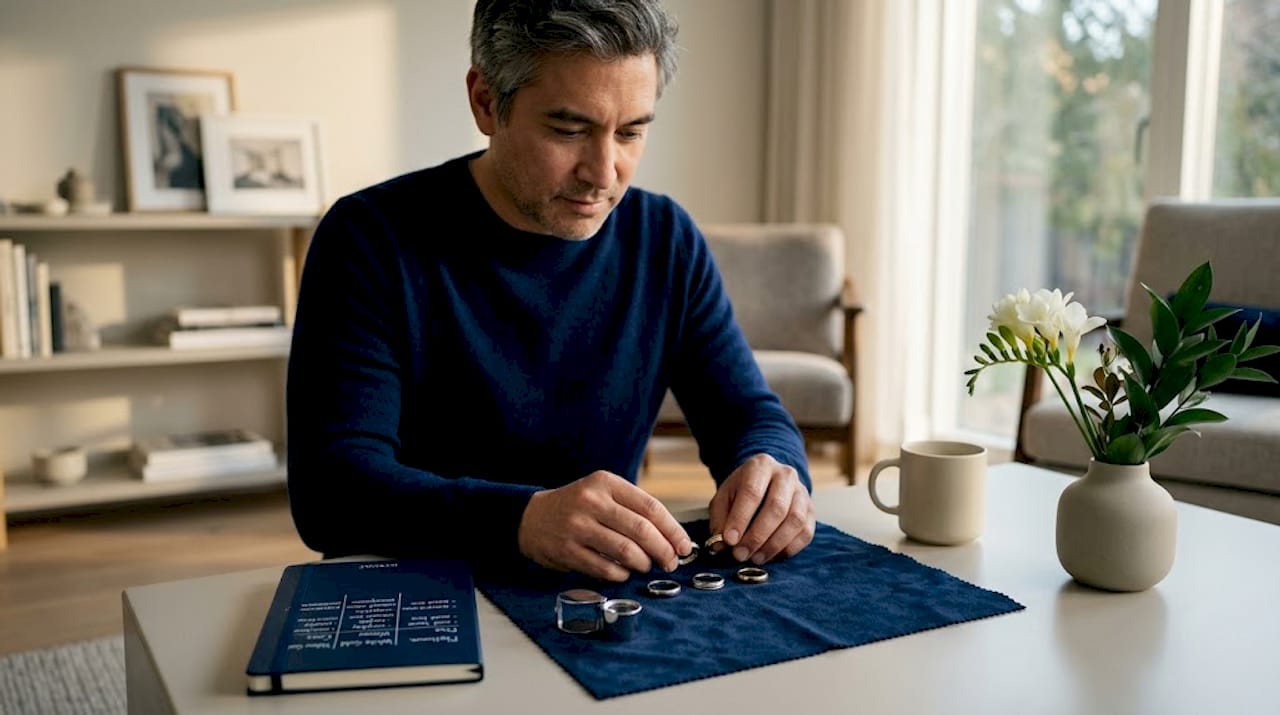
Platinum is strong and hypoallergenic but carries the highest price tag. White gold requires periodic rhodium plating to maintain its color and may cause reactions in wearers with nickel sensitivity. Palladium sits between platinum and white gold in cost while sharing platinum’s hypoallergenic properties. Titanium and tungsten cannot be resized, which makes precise sizing a non-negotiable requirement before purchase.
Pro Tip: If you or the recipient has a history of skin reactions to jewelry, get tested for nickel sensitivity before choosing white gold. Platinum or palladium will save you discomfort and future expense.
Clients who understand metal properties make better decisions. Knowing durability, allergy risk, and maintenance needs empowers you to choose based on real factors rather than visual appeal alone.
4. Mistakes to avoid in the custom ring design process
This is where most people learn the hard way. These are the mistakes worth knowing before you start.
- Chasing trends instead of character. Trending ring styles have a short shelf life. A design that feels “of the moment” in 2026 may feel dated by 2032. Favor proportions and details that reflect the wearer’s personality rather than the current season.
- Skipping accurate finger sizing. Ring size fluctuates with temperature, time of day, and body changes. Get sized at different times and in different conditions. If you are choosing a metal that cannot be resized, this step becomes critical.
- Ignoring structural specifications. Minimum wall thickness of 1.3 to 2.2 mm depending on band width and metal type prevents band deformation during daily wear. Prong sizing must match the stone dimensions exactly to hold the stone securely without cracking it.
- Skipping the prototype stage. CAD modeling and wax prototypes catch proportion issues, stone fit problems, and comfort flaws before any precious metal is used. Skipping this step to save time usually costs more time and money later.
- Not verifying stone-seat geometry. Each prong or bezel must fit the gemstone snugly based on exact measurements. A stone that wobbles in its setting is a stone waiting to be lost.
- Designing without consulting a setter. Your jeweler designs the piece, but a skilled stone setter is the one who physically secures your stone. Getting setter feedback on prong placement and bezel depth before finalizing the design prevents last-minute structural changes.
Pro Tip: Ask to see the CAD render from multiple angles and at actual size before approving the design. A ring that looks proportional in a glamour shot can feel very different at its real dimensions on your finger.
5. A step-by-step timeline for getting it right
Most custom rings take 4 to 8 weeks to create. Add time for research, design rounds, revisions, and shipping, and starting 3 to 6 months ahead of your target date is genuinely advisable, not just cautious.
Here is a practical sequence:
- Gather inspiration. Spend two to three weeks collecting images, noting what you actually like about each one. Look for patterns across your favorites rather than one perfect photo.
- Set your budget before meeting anyone. Walk into every jeweler conversation with a firm number. This filters options productively rather than leaving you overwhelmed.
- Meet with at least two jewelers. Different designers will interpret your brief differently. The variation is informative.
- Review the CAD model carefully. Frequent feedback rounds across CAD renders and physical prototypes catch comfort, style, and technical mismatches before production. Do not approve a design you are not fully certain about.
- Confirm sizing, insurance, and delivery window. Before placing the final order, get ring size confirmation, ask about insurance options for the finished piece, and confirm the delivery date in writing.
- Allow buffer time. Custom jewelry timelines slip. Build in at least two extra weeks beyond the quoted date.
The process is iterative by design. Expecting to get everything right on the first round sets you up for frustration.
My honest take on balancing uniqueness and longevity
I’ve worked with a lot of people on custom pieces, and the most common regret I hear is not about what someone chose. It is about what they over-designed. There is a version of “unique” that reads as personal and meaningful, and there is a version that reads as trying too hard. The difference usually comes down to restraint.
In my experience, the rings that still feel right after a decade are the ones built on clean proportions with one or two specific personal details. A simple band with a hidden engraving and a stone that has family meaning. A classic solitaire in a color of gold the wearer actually loves. Subtle personal touches carry more weight than complex designs that announce themselves loudly.
What I’ve learned is that collaboration with your jeweler is not just a courtesy. It is the actual design process. The best outcomes happen when clients bring a clear brief, stay open to technical feedback, and trust the iteration. Patience in the design phase almost always produces a better result than urgency.
If you are designing for someone else, resist the urge to guess at what they would want. A brief, casual conversation about style preferences is far less risky than a surprise that misses the mark.
— ICEVAULT
Design your custom ring with Icevaultatl
At Icevaultatl, we specialize in lab-grown diamonds, moissanite, and fully customized fine jewelry built for people who want quality they can see and ethics they can feel good about. Whether you are exploring ways to personalize rings for a proposal or looking for a meaningful piece to gift, our collection is a strong starting point for ideas and inspiration. Every piece in our custom engagement ring collection reflects a commitment to craftsmanship and transparency on sourcing. You can also explore a solid yellow gold lab diamond example to see how metal and stone choices come together in a finished design. Visit Icevaultatl to browse options, get pricing, and take the first step toward a ring that is genuinely yours.
FAQ
How long does the custom ring design process take?
Most custom rings take 4 to 8 weeks to produce, but accounting for research, design revisions, and prototypes, starting 3 to 6 months ahead is practical for most occasions.
What is the best metal for a custom engagement ring?
Platinum is the most durable and hypoallergenic option, making it well-suited for daily wear, though palladium and solid gold alloys are strong alternatives depending on budget and aesthetic preference.
Can a custom ring include lab-grown diamonds?
Yes. Lab-grown diamonds carry the same optical and physical properties as mined diamonds and are a popular choice in custom ring design for their lower cost and ethical sourcing.
What does a CAD model do in ring design?
CAD modeling creates a digital 3D version of the design that allows jewelers and clients to review proportions, stone fit, and structural details before any metal is used, preventing costly errors.
How do I personalize a ring without making it look overdone?
Focus on one or two specific details that carry real meaning, such as a hidden engraving or a birthstone set discreetly, rather than layering multiple decorative elements that compete with each other.