
Designing custom earrings online means selecting your preferred metals, gemstones, shapes, and settings through interactive platforms that produce made-to-order pieces built to your exact specifications. The process is more structured than most people expect. Platforms like The Earrings Lady and Golden Hour Designs let you upload images, choose hardware, and specify size before production begins. Icevaultatl takes this further by offering lab-grown diamond and moissanite options with certified metal grades, giving you both creative control and material transparency. Whether you want personalized studs, halo designs, or charm-stacked hoops, the steps to design earrings online follow a clear, repeatable workflow.
How to design custom earrings online: the core process
Online earring customization works through a structured sequence of decisions: material, style, setting, and size. Each choice builds on the last, and skipping steps creates problems at production. The best platforms guide you through this sequence with visual selectors, dropdown menus, and preview tools so you see your design before committing to an order.
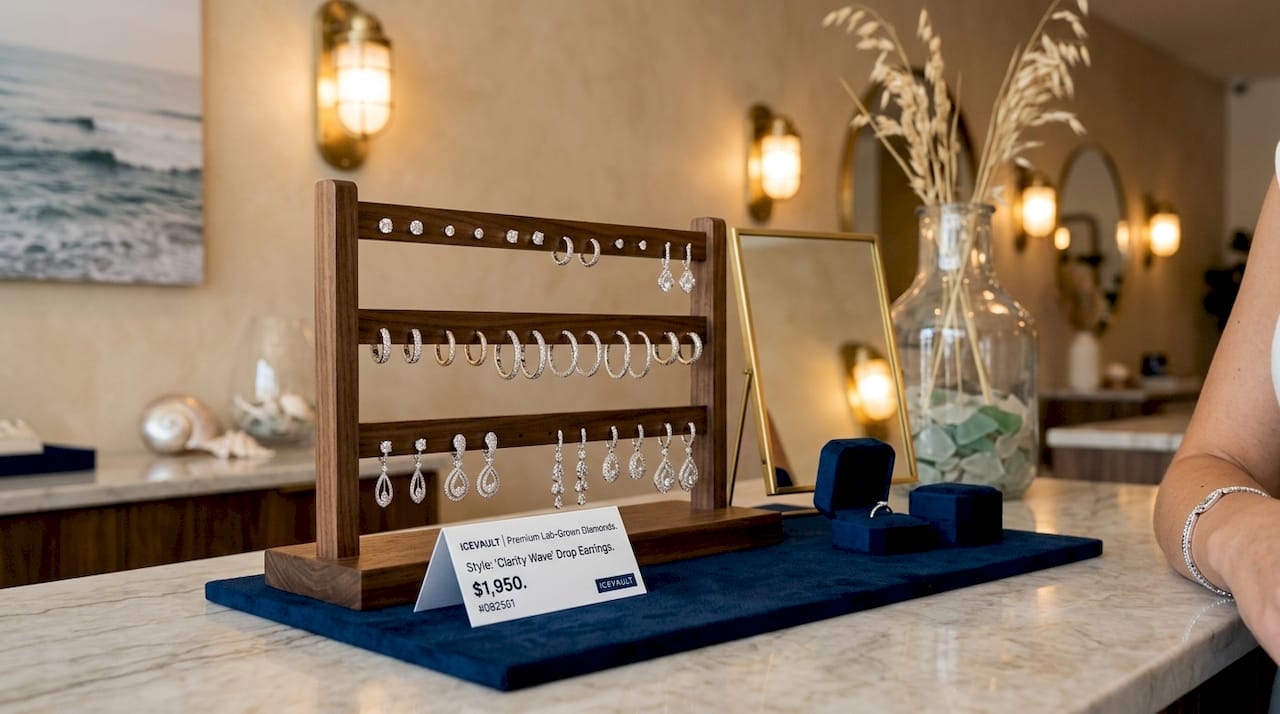
The workflow typically starts with choosing your earring type. Studs, hoops, dangles, and clip-ons each have different structural requirements that affect which customization options are available. A stud, for example, limits your surface area but gives you maximum focus on the center stone or image. A hoop or huggie opens up charm placement along the band.
After selecting the type, you upload your image or choose from built-in templates, then specify color, finish, and hardware preferences. Platforms that follow a made-to-order workflow treat each order as a unique production job rather than a pick-from-inventory transaction. This distinction matters because it means your specs are locked in before fabrication starts, not adjusted afterward.
What materials and metals should you choose for sensitive ears?
Metal choice is the most consequential decision in the entire process, especially for sensitive ears or healing piercings. The wrong metal causes contact dermatitis, prolonged healing, and in some cases infection. The right metal is invisible. You never think about it.
Common metals used in custom earrings include:
- Solid 14k or 18k gold: The most widely recommended option for sensitive skin. The alloy composition in 14k gold is stable and well-tolerated by most people.
- Implant-certified titanium: The preferred choice for new piercings. Lightweight, hypoallergenic, and corrosion-resistant.
- 925 sterling silver: Suitable for healed piercings in most people, but contains copper alloys that can irritate unhealed tissue.
- Surgical steel: Widely marketed but inconsistently defined. Alloy composition varies by manufacturer.
The critical point here is that generic metal labels are not sufficient when you have sensitive skin or a fresh piercing. A listing that says “titanium” without specifying the grade tells you nothing useful. Implant-certified titanium (ASTM F136 grade) is the standard you need, and reputable platforms will state it explicitly.
For new piercings specifically, the material must also have a smooth, polished finish with no rough edges or porous surfaces where bacteria can accumulate. This rules out many fashion-grade metals regardless of their base composition.
Pro Tip: When reviewing a product listing for sensitive ears, search for the words “implant-certified” or “ASTM F136” rather than just “titanium.” If those terms are absent, ask the seller directly before purchasing.
Icevaultatl’s lab diamond stud earrings list metal specifications clearly, which is the baseline standard you should expect from any platform you use.
How do online customization tools work and what options do they offer?
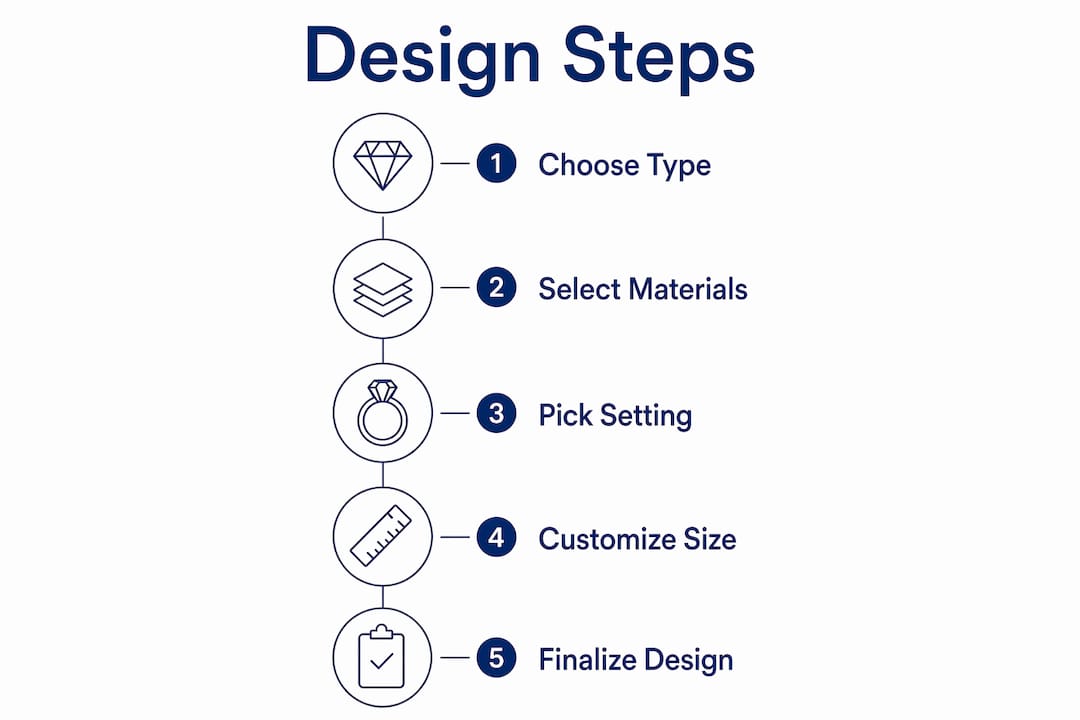
The mechanics of online earring customization vary by platform, but the best tools share a common structure. Here is the typical sequence when you design unique earrings online through a full-featured platform:
- Select your base earring type. Choose from studs, huggies, hoops, dangles, or clip-ons. This determines the structural template for your design.
- Upload your image or choose a template. Platforms like The Earrings Lady allow you to upload custom images and specify design details including color, hardware, size, and shape.
- Choose your hardware. Post style, butterfly back, lever back, or screw back. Each affects security and comfort differently.
- Set your size. Diameter for hoops, millimeter measurement for studs. Size affects both appearance and price.
- Add charms or gemstones. These are typically priced separately from the base earring.
- Review and confirm. Most platforms show a design summary before you submit. Check every field before placing the order.
Turnaround times for made-to-order earrings typically run 2 to 3 days from order confirmation to production completion, not including shipping. That timeline assumes your design files are clean and your specifications are complete. Incomplete orders get flagged and delayed.
| Platform feature | What it controls | Why it matters |
|---|---|---|
| Image upload | Visual design on earring face | Enables full personalization |
| Hardware selector | Post and back type | Affects security and comfort |
| Size input | Diameter or millimeter measurement | Determines fit and price tier |
| Charm add-ons | Decorative elements on base | Expands design complexity |
| Material selector | Metal type and finish | Determines safety and durability |
A custom clothing order workflow follows the same logic as custom jewelry production: the more precisely you specify your requirements upfront, the fewer revisions you face downstream. Treat your earring design brief the same way.
What are the main earring setting types and how do they affect appearance?
The setting is the metal structure that holds your stone in place. It determines how much light reaches the stone, how secure the stone is, and how the earring sits against your ear. Most people focus on the stone itself and underestimate how much the setting changes the final look.
| Setting type | Sparkle level | Security | Best for |
|---|---|---|---|
| Prong | High | Moderate | Maximum brilliance, formal wear |
| Bezel | Moderate | High | Active lifestyles, everyday wear |
| Halo | Very high | Moderate | Statement pieces, visual size boost |
| Martini | High | Moderate | Low-profile studs, natural look |
| Pavé | High | Moderate | Accent stones, decorative borders |
Prong settings maximize light entry into the stone by holding it with minimal metal contact, which produces the most visible sparkle. Bezel settings wrap the stone in a continuous metal rim, offering more protection and a lower profile. The tradeoff is real: a bezel-set stone looks slightly smaller and less brilliant than the same stone in a prong setting.
Halo settings surround the center stone with a ring of smaller accent stones, which creates the visual impression of a larger center stone. This is a practical choice if you want significant visual presence without paying for a larger primary stone. The cut quality of the center stone still matters more than carat weight in halo designs. A well-cut smaller stone outperforms a poorly cut larger one in terms of visible brilliance.
Pro Tip: If you wear earrings daily and work with your hands, choose a bezel or martini setting over a prong. Prong tips catch on fabric and hair over time, which loosens the stone.
Icevaultatl’s halo moissanite studs demonstrate how a halo setting amplifies visual impact without requiring a large center stone. The 6mm diameter delivers a statement look at a fraction of the cost of a comparable diamond piece.
For guidance on earring styles by budget, Icevaultatl’s resource breaks down which settings and stone sizes deliver the best value at different price points.
How to budget and price your custom earrings
Custom earring pricing follows a modular structure. You pay for the base earring first, then add costs for each customization element. Understanding this structure prevents budget surprises at checkout.
Key cost components to account for:
- Base earring price: Covers the metal, construction, and standard hardware. For example, huggie base prices at platforms like Golden Hour Designs start around $18 per pair before any charms or stones are added.
- Charm pricing: Each charm is priced separately. A pair of huggies with three charms per ear costs the base price plus six charm prices. The base price excludes charm costs entirely, so calculate them individually.
- Gemstone upgrades: Lab-grown diamonds and moissanite are priced by carat weight and cut grade. A 0.5 CTW lab diamond stud costs significantly less than a 1.0 CTW equivalent, but the visual difference at normal viewing distance is smaller than most people expect.
- Metal upgrades: Moving from sterling silver to 14k gold adds cost but also adds longevity and hypoallergenic properties.
- Size adjustments: Larger hoops and wider bases use more metal, which increases the base price.
The most effective budgeting approach is to fix your metal and base type first, then allocate remaining budget to stones or charms. Trying to maximize every variable simultaneously pushes costs up fast. Choosing a well-cut smaller stone in a halo setting, for instance, delivers more visual impact per dollar than a larger stone in a plain prong setting.
Key takeaways
Designing custom earrings online requires clear decisions on metal grade, setting type, and base structure before adding stones or charms, since each choice directly affects safety, appearance, and final cost.
| Point | Details |
|---|---|
| Verify metal certification | Demand implant-certified grades, not just generic metal names, for sensitive or healing ears. |
| Choose setting by lifestyle | Bezel settings suit active wear; prong and halo settings maximize sparkle for formal use. |
| Budget modularly | Price the base earring first, then add charm and gemstone costs separately to avoid surprises. |
| Use platform tools fully | Upload images, specify hardware, and confirm size before submitting to avoid production delays. |
| Cut quality over carat size | A well-cut smaller stone delivers more visible brilliance than a larger stone with poor cut grade. |
What we’ve learned from years of custom earring design
The most common mistake people make when they create personalized earrings online is treating the design tool as the hard part. It isn’t. The hard part is knowing what you actually want before you open the tool. People who spend time deciding on metal grade, setting type, and size before touching the interface produce better results and fewer revisions than people who explore options in real time.
Material specifications deserve more attention than most buyers give them. At Icevaultatl, we see customers focus entirely on stone size and overlook the metal entirely until they experience irritation. The metal is in contact with your skin every hour you wear the piece. It deserves the same scrutiny as the stone.
Setting choice is also underrated as a practical decision. A prong-set stud looks stunning in photos, but if you wear it to the gym, to bed, or while working with fabric, the prongs will catch and eventually loosen. A bezel or martini setting on the same stone would last years longer with no maintenance. Match your setting to your actual life, not your ideal one.
The personalization process itself is worth taking seriously as a creative act. Custom earrings carry specific meaning in a way that off-the-shelf pieces don’t. Whether you’re designing for yourself or as a gift, the decisions you make in the design interface translate directly into something someone will wear and notice. That’s worth doing carefully.
— ICEVAULT
Design your custom earrings with Icevaultatl
Icevaultatl offers lab-grown diamond and moissanite earrings with clear material specifications, certified metal grades, and multiple setting options across its product catalog. If you want to start designing today, the site covers studs, halo designs, and custom configurations with transparent pricing on stones and bases. The 5mm lab diamond studs are a strong starting point for anyone prioritizing certified materials and clean design. For a bolder look, the halo moissanite collection delivers maximum visual presence at a competitive price point. Every product listing includes the metal grade and stone specifications you need to make an informed decision before purchasing.
FAQ
What metals are safe for sensitive ears in custom earrings?
Implant-certified titanium (ASTM F136) and solid 14k or 18k gold are the two safest options for sensitive ears. Generic labels like “titanium” or “surgical steel” without grade specifications do not guarantee safety.
How long does it take to receive made-to-order custom earrings?
Most made-to-order platforms complete production in 2 to 3 days after order confirmation, not including shipping time. Incomplete design specifications can delay this timeline.
What is the difference between prong and bezel settings?
Prong settings hold the stone with minimal metal contact, maximizing sparkle and light entry. Bezel settings wrap the stone in a metal rim, offering more protection and a lower profile suited to everyday wear.
How are custom charm earrings priced?
The base earring price and charm prices are separate line items. You pay for the base structure first, then add individual charm costs on top, which allows flexible budgeting for different design complexity levels.
Does cut quality matter more than carat size in stud earrings?
Cut quality determines visible brilliance more than carat weight in stud earrings. A well-cut smaller stone appears brighter and more appealing than a larger stone with a poor cut grade.