
Moissanite jewelry care is defined as a routine practice of gentle cleaning, chemical avoidance, and proper storage that preserves both the stone and its metal setting. Moissanite itself ranks 9.25 on the Mohs hardness scale, making it one of the most scratch-resistant gemstones available. Yet the most common mistake owners make is treating the stone as the only thing that needs protection. The setting, particularly gold vermeil, is far more vulnerable to daily wear, moisture, and chemical exposure. Knowing how to care for moissanite jewelry correctly means protecting the whole piece, not just the gem.
How to clean moissanite jewelry safely at home
Monthly cleaning is the single most effective habit for keeping moissanite jewelry brilliant. Surface oils, lotion residue, and soap film accumulate quickly on any stone, and moissanite is no exception. The good news is that any dullness is temporary. Moissanite is non-porous, so residues sit on the surface and clean off completely without leaving permanent damage.
Follow these steps each month for safe, effective at-home cleaning:
- Fill a small bowl with warm water. Use warm, not hot, water. Boiling or very hot water can stress metal settings, especially those with enamel or plating.
- Add a few drops of mild dish soap or baby shampoo. Dawn, Seventh Generation, or any fragrance-free dish soap works well. Avoid antibacterial soaps, which contain harsh surfactants that degrade gold vermeil plating over time.
- Soak the piece for 2 to 15 minutes. Two to three minutes handles light buildup. Heavier residue from daily wear may need up to 15 minutes. Hermin Jewelry’s 2026 guide recommends a 2 to 3 minute soak as a reliable starting point for most pieces.
- Brush gently with a soft-bristled brush. A baby toothbrush or a dedicated jewelry brush works perfectly. Focus on the underside of the stone and around prongs, where buildup concentrates most.
- Rinse thoroughly under lukewarm running water. Hold the piece over a bowl or plug the drain. Residual soap left on the setting causes its own dullness.
- Pat dry immediately with a lint-free cloth. Air drying allows water to sit on the metal, which accelerates tarnish on gold vermeil. Dry the piece completely before storing or wearing it.
Pro Tip: Use a wooden toothpick to gently dislodge debris from tight prong gaps before soaking. This reduces the scrubbing force needed and protects delicate settings from unnecessary stress.
Ultrasonic cleaners are a common question in any moissanite care guide. Moissanite’s chemical stability tolerates ultrasonic cleaning well at the stone level. However, the vibrations that make ultrasonic cleaners effective are the same vibrations that loosen prongs and weaken delicate settings over time. For most moissanite rings and earrings with prong settings or gold vermeil, manual soap-and-water cleaning is the safer and equally effective choice.

What chemicals and conditions damage moissanite settings?
The stone itself is nearly indestructible under normal wear conditions. The setting is not. Chlorine, bleach, and ammonia are the three chemicals most likely to degrade gold vermeil plating, and exposure to these chemicals can strip plating within weeks of repeated contact.
Beyond the obvious culprits, everyday products cause gradual but real damage:
- Perfume and hairspray leave a film of alcohol and synthetic compounds that dulls the surface of both the stone and the setting. Apply these products first, let them dry, then put on your jewelry.
- Sunscreen and lotion are oil-based and cling to the underside of stones, blocking light and reducing brilliance noticeably.
- Chlorinated pool water is particularly aggressive. Even brief exposure to pool water degrades vermeil plating faster than most other factors.
- Shower water and soap residue seem harmless but cause cumulative dullness when jewelry is worn during bathing and then air-dried without wiping.
- Saltwater from the ocean carries abrasive particles and corrosive salt that attack metal settings from multiple directions simultaneously.
Pro Tip: Follow the “last on, first off” rule. Put your moissanite jewelry on after applying all personal care products, and remove it before washing your hands, showering, or swimming. This single habit eliminates most chemical exposure.
Removing residue daily before it hardens is the most cost-effective maintenance strategy available. Hardened residue requires more aggressive cleaning, which increases the risk of setting damage. Prevention is always cheaper than repair.
How should you store moissanite jewelry to prevent scratches?
Storage is where most people make avoidable mistakes. Moissanite’s hardness of 9.25 means it will scratch softer gemstones like opals, pearls, and even some sapphires if stored in contact with them. The reverse is also true: diamonds, which rank 10 on the Mohs scale, can scratch moissanite if the two pieces rub together in a shared compartment.
The right storage approach protects both the stone and the setting:
- Store each piece separately in its own soft pouch or a lined compartment within a jewelry box. Velvet-lined boxes and microfiber pouches are both effective. This prevents contact scratches and tangling.
- Wrap pieces intended for long-term storage in lint-free cloth before placing them in pouches. The cloth absorbs residual moisture that would otherwise accelerate tarnish on vermeil plating.
- Keep jewelry away from bathrooms. Daily shower humidity creates a consistently moist environment that degrades gold vermeil faster than almost any other storage condition.
- Choose a cool, dry location such as a bedroom dresser drawer or a dedicated jewelry armoire. Consistent temperature and low humidity are the two factors that matter most for long-term storage.
| Storage method | Protection level | Best for |
|---|---|---|
| Individual soft pouch | High | Daily-wear pieces |
| Velvet-lined compartment | High | Rings and earrings |
| Lint-free cloth wrap | Very high | Long-term storage |
| Shared jewelry box tray | Low | Not recommended |
| Bathroom shelf | Very low | Avoid entirely |
The table above makes the tradeoffs clear. A shared jewelry box tray costs nothing extra but creates real scratch and tarnish risk. Individual pouches cost very little and solve both problems at once.
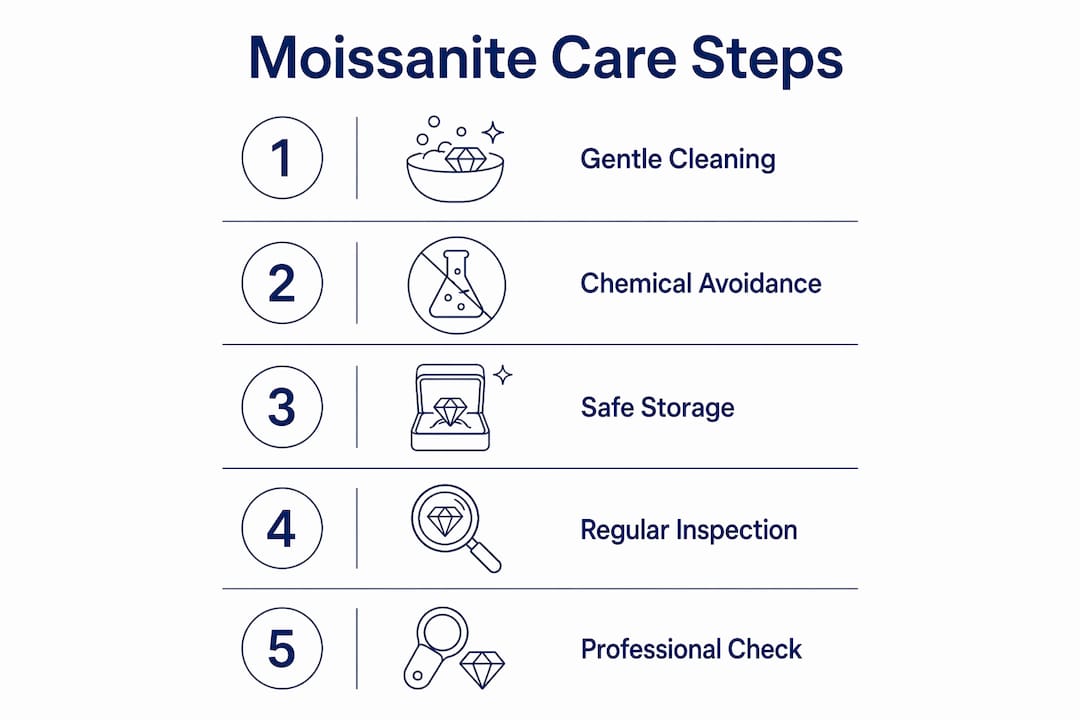
How to monitor settings and prevent stone loss
Cleaning keeps moissanite brilliant. Setting inspections keep it secure. These are two separate habits, and both matter. A stone that sparkles but sits in a loose prong is one bump away from being lost permanently.
Follow this monthly maintenance routine to catch problems early:
- Perform the wiggle test. Hold the piece under good light and gently press the stone from multiple sides with a fingernail or toothpick. Any movement, even slight rocking, means the prongs need professional attention. A monthly prong check catches loose stones before they become lost stones.
- Inspect prongs visually. Look for prongs that appear bent, worn flat, or missing entirely. A jeweler’s loupe at 10x magnification makes this much easier, and a basic loupe costs under $15.
- Check for metal discoloration. Dark spots or uneven color on gold vermeil indicate plating wear. This is cosmetic at first but becomes a structural concern if the base metal is exposed to moisture repeatedly.
- Note any changes in how the piece feels. A ring that suddenly feels lighter or a setting that catches on fabric may indicate a structural change worth investigating.
- Schedule professional inspection every two years. Professional yearly inspection detects early wear that home checks miss. A jeweler can tighten prongs, replate vermeil, and polish the stone in a single appointment.
Pro Tip: Take a photo of your moissanite jewelry every six months under consistent lighting. Comparing photos over time reveals gradual changes in prong condition or plating wear that are nearly invisible day to day.
The wiggle test combined with proper cleaning forms the core of any reliable moissanite maintenance routine. Neither step takes more than five minutes per month, and together they prevent the two most common causes of jewelry damage: residue buildup and undetected setting wear.
Key takeaways
Caring for moissanite jewelry requires protecting the metal setting from chemicals and moisture, not just keeping the stone clean.
| Point | Details |
|---|---|
| Monthly cleaning routine | Soak in warm soapy water, brush gently, and pat dry immediately to prevent tarnish. |
| Chemical avoidance | Keep chlorine, bleach, perfume, and lotion away from settings to protect gold vermeil plating. |
| Separate storage | Store each piece in its own pouch or lined compartment to prevent scratches and moisture damage. |
| Monthly wiggle test | Check stone security monthly and take pieces to a jeweler if any movement is detected. |
| Professional inspection | Schedule a professional check every two years to catch prong wear and plating loss early. |
Icevaultatl’s take on what actually keeps moissanite looking new
Most moissanite care articles spend too much time on the stone and not enough on the setting. After working with moissanite jewelry across hundreds of pieces, the pattern is consistent: the stone almost never needs repolishing. It holds its clarity and brilliance indefinitely under normal wear. What fails first is always the setting, specifically the plating on gold vermeil and the integrity of prongs on rings and earrings.
The habits that actually make a difference are not complicated. Taking jewelry off before swimming, applying perfume before putting on a ring rather than after, and wiping pieces dry before storing them. These are not dramatic interventions. They are small, repeatable actions that collectively determine whether a piece looks the same in five years as it does today.
What I find most useful to tell people is this: moissanite’s durability gives you a long window to correct mistakes, but the setting does not have the same tolerance. A prong that loosens gradually over six months of daily wear will not announce itself. The wiggle test exists precisely because the failure mode is silent until the stone is gone. Build the inspection habit before you need it, not after.
The moissanite vs. diamond comparison often focuses on brilliance and price. The more practical comparison for long-term owners is maintenance cost. Moissanite’s hardness means professional repolishing is rarely necessary, which keeps lifetime care costs low. Protect the setting, and the stone takes care of itself.
— ICEVAULT
Shop moissanite jewelry built to last

Icevaultatl carries a curated selection of moissanite pieces designed with setting quality as a priority, from iced-out moissanite earrings to classic engagement ring styles. Every piece is built with the kind of craftsmanship that holds up to daily wear when paired with the right care routine. If you are ready to put your new care knowledge to work on a piece worth protecting, browse the full ring and earring collection at Icevaultatl. For specific setting questions or care guidance on a piece you already own, the Icevaultatl team is available to help you get the most out of your jewelry investment.
FAQ
Does moissanite lose its sparkle over time?
Moissanite does not permanently cloud or fade. Any dullness is caused by surface residue from lotion, soap, or oils, and it cleans off completely with warm water and mild dish soap.
Can you use an ultrasonic cleaner on moissanite rings?
Moissanite stones tolerate ultrasonic cleaning, but the vibrations can loosen prongs on delicate settings. Manual soap-and-water cleaning is the safer choice for most moissanite rings and earrings.
How often should moissanite jewelry be professionally inspected?
A professional inspection every two years is the standard recommendation. A jeweler can tighten prongs, assess plating wear, and polish the stone in a single visit before damage becomes costly.
Is it safe to wear moissanite jewelry in the shower?
Wearing moissanite in the shower is not recommended. Soap residue and water left on the setting cause cumulative dullness, and daily shower humidity accelerates tarnish on gold vermeil plating.
What is the best way to store moissanite jewelry long term?
Store each piece separately in a soft pouch or velvet-lined compartment, wrapped in lint-free cloth to absorb moisture. Keep storage away from bathrooms, where humidity degrades gold vermeil faster than almost any other condition.