
Most jewelry you find in a store tells no story about you. It sits in a display case, identical to the piece sold to a hundred other people that same week. That’s exactly why so many people are asking why customize jewelry at all. The answer runs deeper than aesthetics. Jewelry customization, the industry-standard term for designing pieces tailored to individual specifications, transforms a beautiful object into something that carries real personal weight. Whether you’re marking a milestone, expressing your identity, or searching for a gift that actually lands, a personalized piece does what mass-produced jewelry simply cannot.
Table of Contents
- Key Takeaways
- Why customize jewelry: the emotional case
- Practical advantages worth knowing
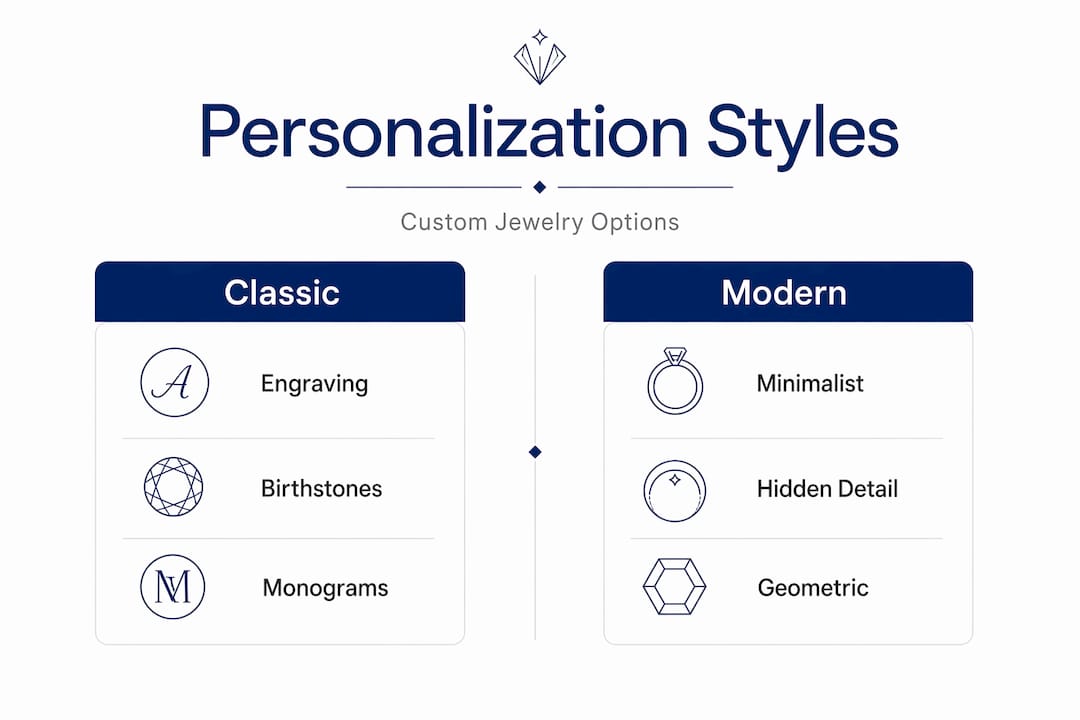
- Common personalization options and current styles
- Challenges to plan around
- How to commission a custom piece
- My take on why personalized jewelry has lasting power
- Explore custom fine jewelry at Icevaultatl
- FAQ
Key Takeaways
| Point | Details |
|---|---|
| Emotional value is the core driver | Custom pieces capture personal milestones and stories that off-the-shelf jewelry never can. |
| Customization means better quality | Personalized fine jewelry typically uses hand-selected materials and superior craftsmanship over mass production. |
| Many options exist for every style | Engraving, birthstones, bespoke settings, and monograms give you multiple ways to personalize any piece. |
| Challenges are manageable with planning | Budget, turnaround time, and wearability concerns are all addressed when you work with a transparent jeweler. |
| The market validates this choice | The personalized gifts market is projected to reach $45.09B by 2030, reflecting mainstream demand. |
Why customize jewelry: the emotional case
There is a version of jewelry that you wear because it looks nice. Then there is the kind you reach for every single day because it means something. Custom jewelry belongs firmly in the second category. When a piece is built around your story, your relationships, or a moment that defined you, it stops being an accessory and starts being a keepsake.
Think about what that actually looks like in practice:
- Initials or names engraved inside a ring or on a pendant connect the piece to a specific person, permanently.
- Significant dates like anniversaries, birthdays, or the day you became a parent ground a piece in a real memory.
- Symbolic design elements such as a specific flower, constellation, or geometric pattern that holds private meaning give a piece a story that only you fully understand.
- Birthstones tied to your children, partner, or family members create a wearable record of the people you love most.
Personalized jewelry delivers emotional, wearable keepsakes that reflect personal identity and milestones in a way that generic accessories simply cannot replicate. That distinction matters enormously when you are choosing a gift. Off-the-shelf jewelry says “I thought you might like this.” Custom jewelry says “I thought about you specifically.”
Pro Tip: When commissioning a custom piece as a gift, write down the three things that make the recipient uniquely themselves before meeting with a jeweler. That list becomes your design brief.
The personalized gifts market is growing at an 8.7% CAGR, rising from $30.79 billion in 2025 to $33.49 billion in 2026. That growth is not driven by trend alone. It reflects a fundamental shift in how people think about meaningful giving and self-expression.
Practical advantages worth knowing
Sentiment alone would be reason enough. But the practical case for customized jewelry is just as strong, and it rarely gets the attention it deserves.
| Factor | Custom Jewelry | Mass-Produced Jewelry |
|---|---|---|
| Uniqueness | One of a kind, made for you | Identical to thousands of others |
| Material quality | Hand-selected, often superior grade | Standardized, cost-driven choices |
| Craftsmanship | Made to specification with attention to detail | Manufactured at scale |
| Longevity | Built to last with personal care | Variable, often less durable |
| Emotional value | High, tied to personal story | Low to moderate |
| Resale and heirloom potential | Strong, carries provenance | Typically low |
Custom jewelry provides exclusivity and superior craftsmanship compared to mass-produced pieces, and that often translates directly to better long-term value for the buyer. When materials are chosen deliberately for a specific design rather than sourced in bulk for a factory run, the result is a piece built to last.
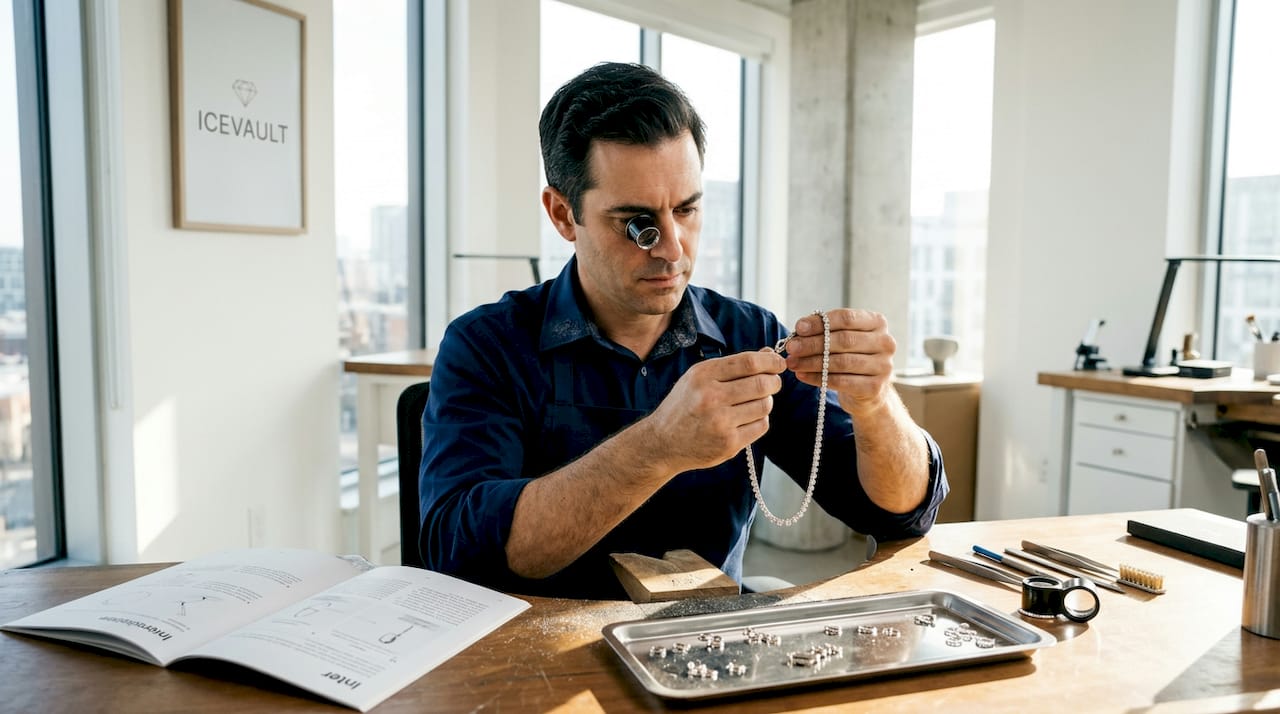
There is also the exclusivity factor. You will not walk into a party and see someone wearing your ring. That might sound like a small thing until it happens with a piece you love, and you realize how much it matters.
Pro Tip: Ask your jeweler for material certificates and documentation. Quality jewelers working on custom pieces welcome this request because it demonstrates the care they put into sourcing.
Consumers are increasingly favoring personalized fine jewelry to express identity and commemorate occasions, and customization has moved from niche to mainstream for exactly these reasons.
Common personalization options and current styles
Jewelry customization is not a single thing. It exists on a spectrum from the subtle to the entirely bespoke, and understanding where different options fall helps you figure out which approach fits your purpose.
Here are the most popular ways to personalize jewelry today:
- Engraving remains the most accessible entry point. A date, a name, a short phrase, or even a fingerprint impression inside a band or on a pendant gives personal meaning without altering the outward design.
- Monograms work across ring styles, necklaces, and bracelets. They read as polished and intentional rather than sentimental, making them ideal for everyday wear.
- Birthstone settings let you incorporate color and personal connection into a fine jewelry piece. Multi-stone pieces can represent family members, friendships, or chapters of your life.
- Bespoke designs start from scratch. You work with a jeweler to create a setting, shape, and overall aesthetic that exists nowhere else. This is the highest level of jewelry customization.
- Heirloom redesign takes existing family pieces and transforms them into something wearable for today. The stones and precious metals remain; the design evolves.
- Lockets and functional keepsakes blur the line between jewelry and memory object, holding photos or mementos inside a wearable form.
Technological advancements in engraving and production now make customization far more accessible than it was even five years ago. E-commerce platforms can preview designs digitally before production begins, which removes much of the guesswork.
Contemporary trends lean toward minimalist personalization, where the custom element is present but restrained. Think a single initial on a fine chain, or a birthstone set flush into a clean band. Bold personalization still has its place for statement pieces and gifts, but the most wearable custom jewelry today tends to let the design speak quietly.
Challenges to plan around
Customizing jewelry is worth doing thoughtfully. A few honest considerations will help you avoid the most common frustrations.
-
Turnaround time. Custom pieces are not available next-day. Depending on complexity, production can take two to eight weeks. If you are customizing an engagement ring or a milestone gift, build that timeline into your planning.
-
Cost expectations. Personalized fine jewelry costs more than comparable mass-produced pieces. The premium reflects material selection, skilled labor, and design time. Set a real budget before you start conversations with jewelers so you can focus on what is actually achievable.
-
Wearability versus meaning. Some customers want to include every meaningful detail in one piece. That often produces something that feels busy rather than beautiful. Successful personalization balances subtle design with integrity, so the piece feels natural to wear every day and not just meaningful on special occasions.
-
Heirloom redesign anxiety. Families frequently delay redesigning inherited jewelry out of fear of irreversibly altering a sentimental object. That hesitation is understandable. The solution is to find a jeweler who treats the original materials with documented care and keeps you involved in every decision.
-
Choosing the right jeweler. Transparency during custom creation is not optional. Clear communication, photo documentation of the process, and honest timelines are signs of a jeweler worth trusting. Vague answers about materials or process are a warning sign worth heeding.
How to commission a custom piece
The process does not have to be complicated. Here is how to approach it with confidence:
- Start with your intention. Are you marking an occasion, expressing identity, creating a gift, or redesigning something inherited? Your reason shapes every decision that follows.
- Research platforms and jewelers that specialize in the type of customization you want. Look for portfolios that show variety, not just a house style. Platforms offering top customizable fine jewelry online often display customer reviews, production photos, and digital preview tools.
- Set your budget before your first conversation. A good jeweler will work within your range and tell you honestly what is achievable. If the first answer is vague, move on.
- Ask about materials. For fine jewelry, understand whether you are working with solid gold, sterling silver, lab-grown diamonds, or moissanite. Each has different cost implications and longevity profiles.
- Use digital previews when available. Many jewelers and online platforms now offer augmented reality or CAD rendering so you can see the design before it is made. This eliminates most of the surprise and significantly reduces revision requests.
- Confirm the timeline in writing. Especially for engagement rings or time-sensitive gifts, get the expected completion date confirmed at the start of the project.
Pro Tip: When exploring customizable jewelry collections online, save screenshots of designs you respond to even if you do not intend to buy them. That visual library becomes a shorthand for communicating your taste to a jeweler.
My take on why personalized jewelry has lasting power
I’ve watched the conversation around personalized jewelry shift considerably over the past several years. What used to feel like a niche request, something you had to specifically seek out, is now a standard expectation. And I think that shift reflects something real about how people relate to objects.
What I’ve found is that the most beloved custom pieces are not the most elaborate ones. They are the ones where a single meaningful detail was executed with genuine craft. A ring that happens to contain your grandmother’s diamond, reset in a style you would actually wear. Earrings with your daughter’s birthstone set so cleanly they read as fine jewelry first and sentimental object second. That balance is harder to achieve than it looks, but when it works, the piece becomes irreplaceable.
I’ve also noticed that the ethics of the materials matter more and more to the people buying custom jewelry today. Lab-grown diamonds and moissanite have made it possible to build a genuinely beautiful, high-quality custom piece without the sourcing concerns attached to mined stones. That combination, personal meaning plus ethical clarity, is a compelling reason to go custom rather than reach for whatever is in the display case.
My honest view: customize jewelry when you have something specific to say with it. The investment, in time, money, and thought, pays off precisely because the result cannot be replicated.
— ICEVAULT
Explore custom fine jewelry at Icevaultatl
At Icevaultatl, every piece starts with the idea that jewelry should mean something to the person wearing it. The collections include lab-grown diamond engagement rings, moissanite pieces, and customizable fine jewelry built around ethical sourcing and design flexibility. Whether you are looking for custom engagement ring styles that reflect your relationship or a standout piece like the lab diamond stud earrings that blend elegance with personal touch, Icevaultatl gives you real choices. The process is transparent, the materials are certified, and the goal is a piece you will still reach for twenty years from now.
FAQ
What is personalized jewelry?
Personalized jewelry is any piece designed or modified to include elements specific to the wearer, such as engraved names, birthstones, symbolic motifs, or fully bespoke settings. It differs from standard jewelry in that it carries intentional personal meaning.
Why customize engagement rings specifically?
Engagement ring customization allows couples to create a piece that reflects their unique relationship rather than choosing from a standard catalog. A custom ring can incorporate specific stone shapes, settings, metal types, and meaningful details that a ready-made ring cannot offer.
How long does custom jewelry take to make?
Most custom pieces take two to eight weeks depending on design complexity, material sourcing, and the jeweler’s production schedule. Confirm timelines in writing before the project begins, especially for time-sensitive occasions.
Is customized jewelry more expensive than off-the-shelf?
Custom jewelry typically costs more because it involves individual material selection, skilled labor, and design time. However, the quality of materials and craftsmanship often makes it a better long-term value than comparable mass-produced alternatives.
What are the top customizable fine jewelry options?
The most popular choices include bespoke engagement rings, engraved bands, birthstone pendants and earrings, monogram necklaces, and heirloom redesigns. Online platforms with CAD previews and certified materials, like those at Icevaultatl, make the process accessible at multiple price points.